 Pin It
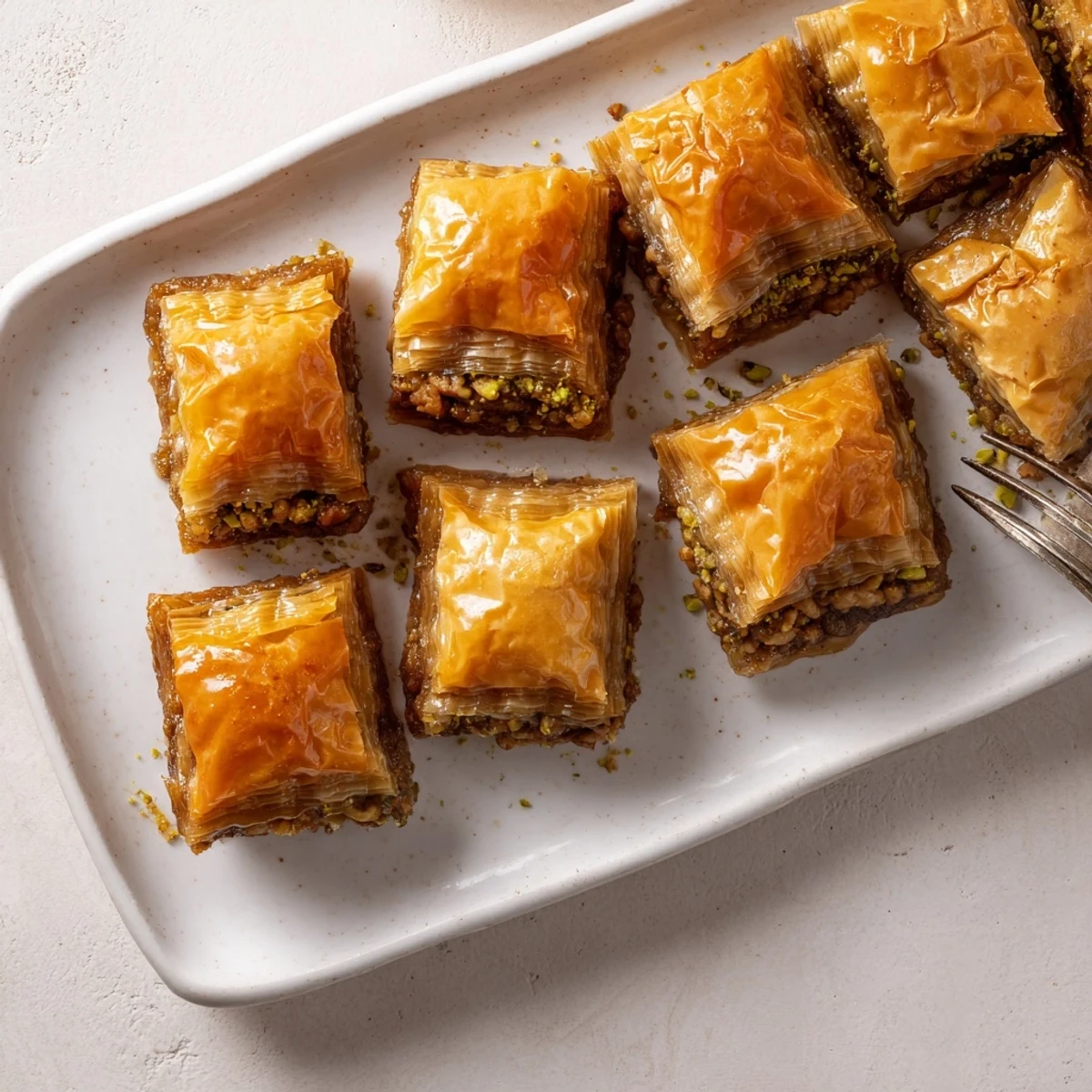
 Master the art of creating perfectly crisp, golden baklava with layers of buttery phyllo pastry and a aromatic nut filling. The secret lies in brushing each phyllo sheet generously with melted butter, then alternating with a mixture of finely chopped walnuts, pistachios, almonds, sugar, and cinnamon. After baking until golden, the hot pastry is immediately drenched in a cooling syrup made from water, sugar, honey, lemon juice, and cinnamon stick. This temperature shock ensures the baklava absorbs every drop of sweetness while maintaining its signature crunch. Let cool completely before cutting into diamonds for the perfect texture.
The first time I attempted baklava, I was visiting my friend Maria's grandmother in her tiny kitchen where the air always smelled like butter and anticipation. She taught me that the secret isn't in some fancy technique it is about patience and having everything ready before you even unroll that first delicate sheet of phyllo. Now whenever I make it, I can hear her voice reminding me to work quickly but gently, like I am handling something precious that could shatter if I rush.
Last Christmas, I made three trays of baklava for our neighborhood gathering and watched in delight as my usually skeptical neighbor took one bite and immediately asked for the recipe. There is something magical about seeing someone's eyes light up when they experience that perfect crunch followed by the sweet syrup soaked nuts. It has become my go to dessert when I want to serve something that feels special and impressive without actually being terribly complicated.
Ingredients
- Phyllo dough: Keep it covered with a damp towel while working because dried out sheets will tear and frustrate you
- Unsalted butter: Melt it completely and brush generously between every single layer this is what creates that signature flaky texture
- Mixed nuts: The combination of walnuts, pistachios, and almonds gives you complexity but you can use whatever nuts you love most
- Granulated sugar: This sweetens the nut filling and balances the tartness of the lemon in the syrup
- Ground cinnamon: Warm spice that ties everything together and makes your kitchen smell incredible
- Water: The base for your syrup
- Sugar: Creates that perfectly sweet sticky coating
- Lemon juice: Essential bright acid that cuts through all the sugar and butter
- Honey: Adds depth and floral sweetness to the syrup
- Cinnamon stick and orange peel: Infuse the syrup with subtle aromatic notes
Instructions
- Prepare your workspace:
- Preheat oven to 180°C and butter your baking dish. Mix all your chopped nuts with sugar and cinnamon in a bowl so you are not scrambling later.
- Layer the foundation:
- Lay down 8 sheets of phyllo, brushing each one thoroughly with melted butter. Do not worry about perfect edges, just get them covered.
- Add the filling:
- Sprinkle about one third of your nut mixture evenly across the buttered phyllo. Try to get it into the corners too.
- Build more layers:
- Add 4 more buttered phyllo sheets, then half your remaining nuts. Repeat with another 4 buttered sheets and the rest of the nuts.
- Finish the top:
- Layer your remaining phyllo sheets, buttering each one as you go. Be generous with that butter, it is worth it.
- Score before baking:
- Use a sharp knife to cut diamonds or squares all the way through. This is crucial for the syrup to penetrate later.
- Bake until golden:
- Bake for 35 to 40 minutes until deeply golden and crisp. The smell will be intoxicating.
- Make the syrup:
- While baklava bakes, simmer water, sugar, lemon juice, honey, cinnamon, and orange peel for 10 minutes. Cool slightly.
- The magic moment:
- Pour that warm syrup slowly over the hot baklava the moment it comes out of the oven. Listen to it sizzle.
- Patience pays off:
- Let it cool completely so every layer absorbs that syrup. Rush this and you will have soggy bottom layers.
 Pin It
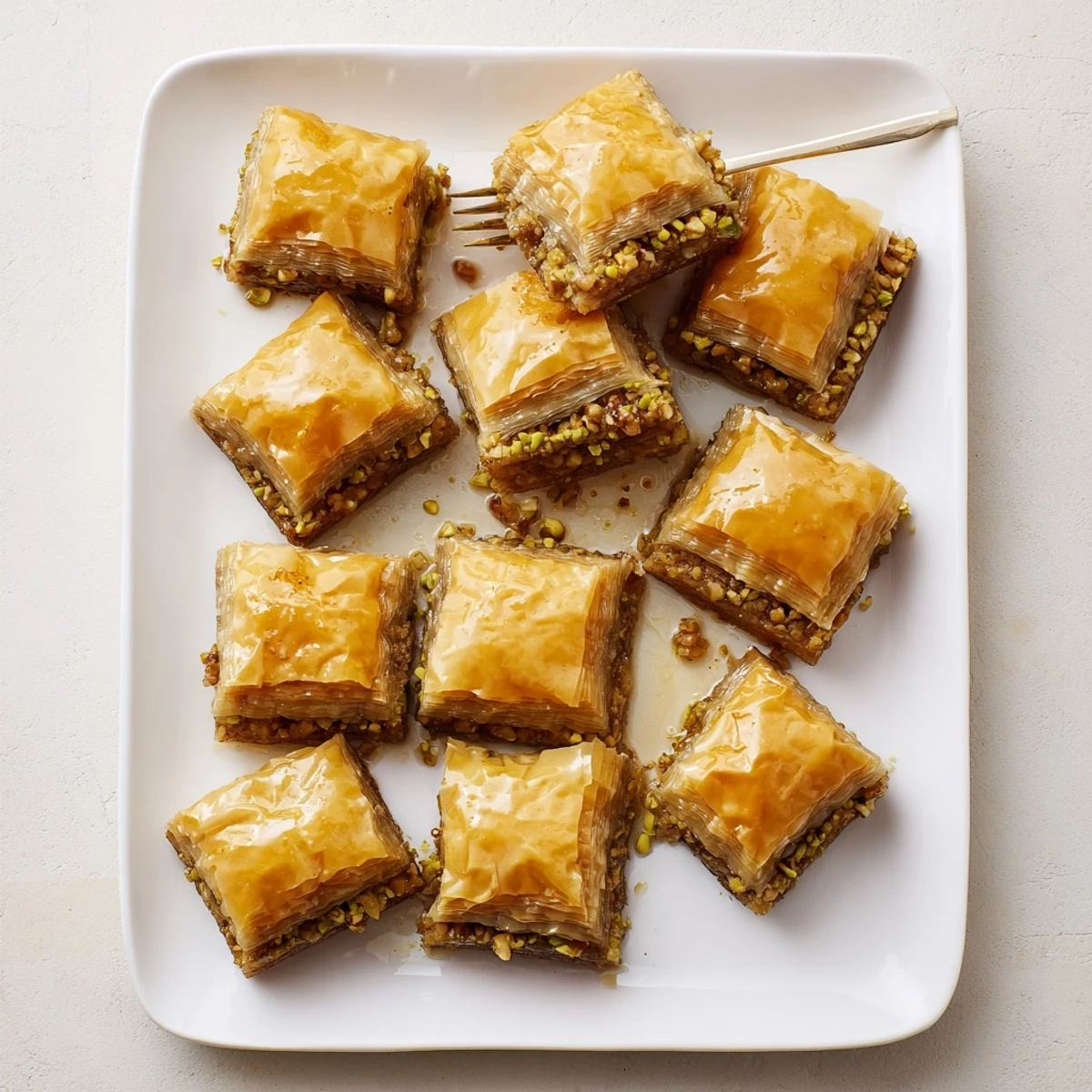
 My sister called me at midnight once, desperate because she had made baklava for her book club the next day but refused to wait for it to cool properly. She learned the hard way that patience is not optional with this recipe. Now she texts me pictures every time she makes it, proudly showing me the perfectly cut diamond pieces and telling me she waited the full cooling time just like I warned her.
Making Ahead
Baklava actually gets better after sitting for a day or two, covered at room temperature. The flavors meld and the texture becomes even more luxurious as the syrup fully permeates every layer. I often make it the day before serving to save myself the stress of last minute preparation.
Serving Suggestions
Small pieces go a long way because baklava is incredibly rich. I cut mine into modest diamonds and serve them alongside strong coffee or tea which helps balance all that sweetness. A little dollop of unsweetened whipped cream or Greek yogurt can also be a nice contrast if you want to temper the sugar.
Storage Tips
Store baklava in an airtight container at room temperature for up to a week. Never refrigerate it unless you absolutely must because the cold will make the phyllo lose its crispness and become disappointingly soggy. You can also freeze it for up to three months, though the texture will be slightly less perfect after thawing.
- Layer pieces between parchment paper if stacking them
- Bring frozen baklava to room temperature before serving
- A crisp topping of extra chopped nuts before serving restores freshness
 Pin It
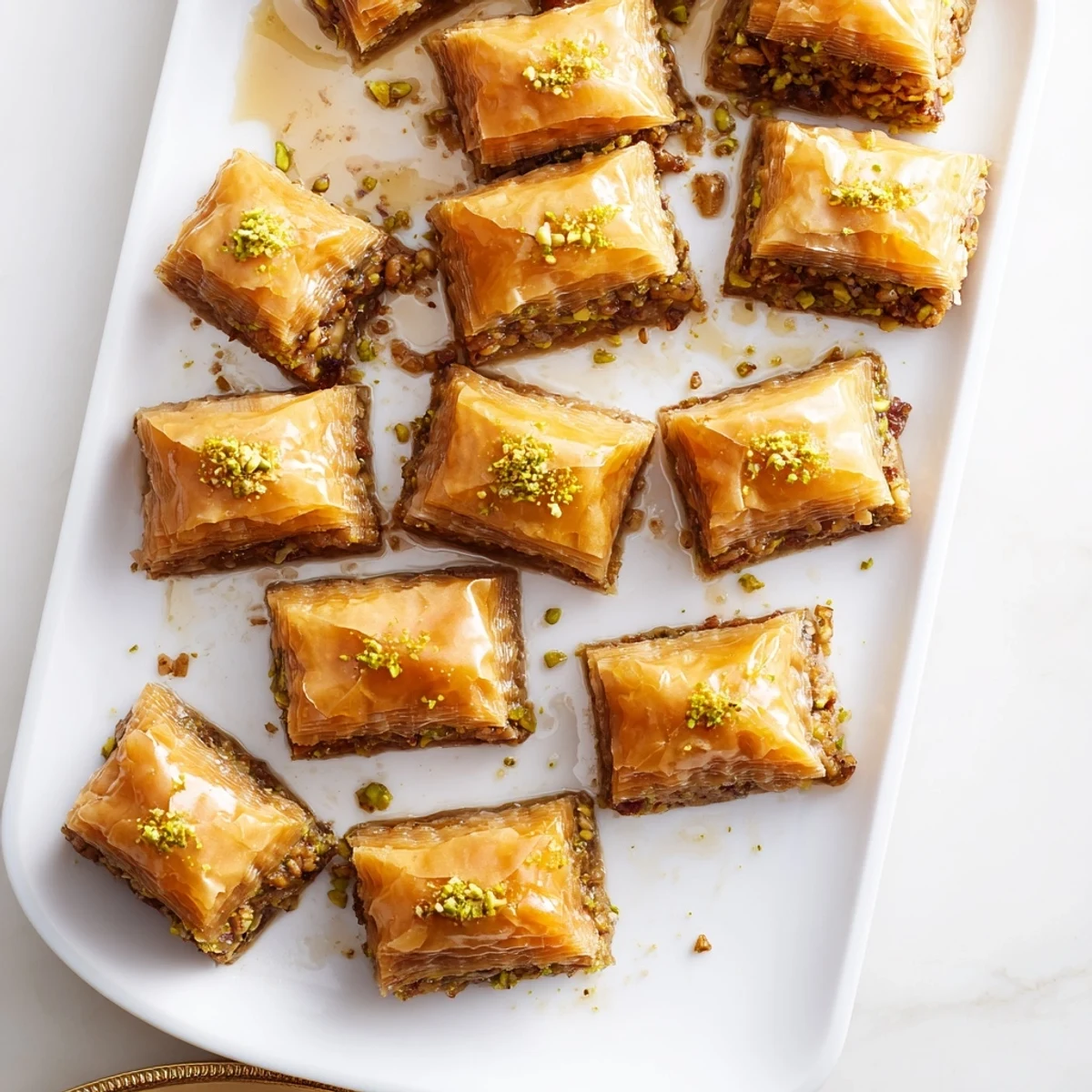
 Every time I serve baklava now, someone inevitably asks for the recipe and I smile thinking about Maria's grandmother and her tiny kitchen. It is funny how food carries memories like that, layers of sweetness and story baked together into something that nourishes more than just hunger.
Recipe Questions & Answers
- → Why must the syrup be cool when pouring over hot baklava?
-
Pouring cool syrup over hot baklava creates a temperature shock that helps the pastry absorb the sweet liquid evenly while maintaining its crisp texture. If both are hot, the phyllo may become soggy rather than perfectly sticky and crunchy.
- → Can I make baklava ahead of time?
-
Yes, baklava actually improves with time. Make it 1-2 days ahead and store at room temperature in an airtight container. The flavors develop and the texture becomes more cohesive as it rests.
- → What's the best way to prevent phyllo from drying out?
-
Keep unused phyllo sheets covered with a slightly damp clean towel while working. Remove only the sheets you need immediately, and work efficiently to minimize exposure to air.
- → Can I substitute the nuts in baklava?
-
Absolutely. While walnuts and pistachios are traditional, you can use pecans, hazelnuts, or cashews. Many home bakers prefer using just one type of nut for a more concentrated flavor.
- → Why cut baklava before baking?
-
Cutting through the raw phyllo layers before baking ensures clean edges and prevents the flaky pastry from shattering when sliced after baking. Use a sharp knife and cut all the way through to the bottom.
- → How do I know when baklava is done baking?
-
Perfectly baked baklava should be evenly golden brown on top. The edges should be slightly darker, and you should see the butter bubbling between the layers. It typically takes 35-40 minutes at 180°C (350°F).