
 Pin It
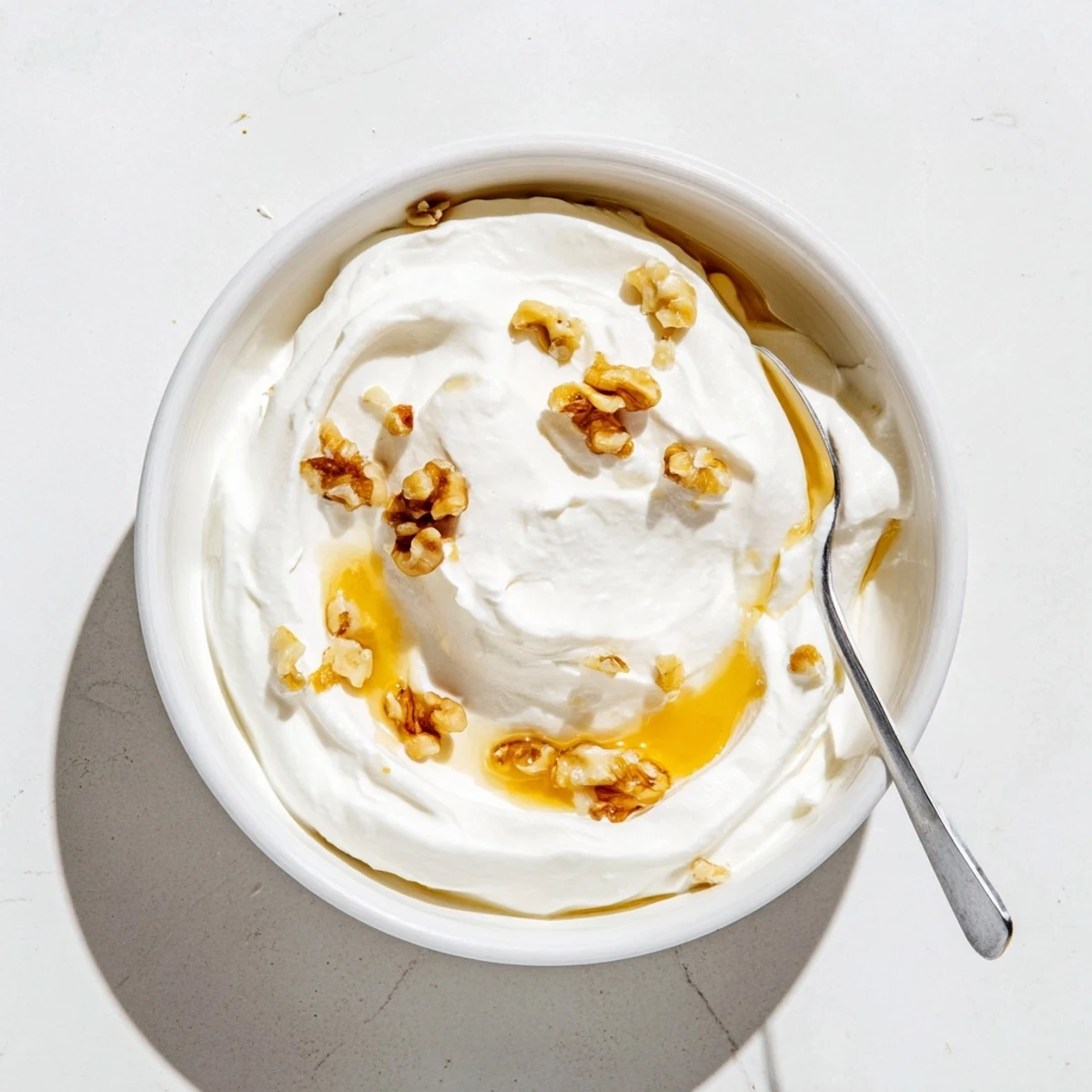
 Transform simple whole milk into thick, creamy Greek yogurt with this straightforward method. The process involves heating milk to the right temperature, adding live cultures, and allowing it to culture for several hours before straining for that signature thick texture.
The result is a versatile dairy product perfect for breakfast bowls, smoothies, baking, or enjoying with honey and fresh fruit. The strained whey can be saved for smoothies or bread recipes, making this an economical choice for home cooks.
There was something magical about watching milk transform into thick, creamy yogurt right on my kitchen counter. The first time I tried making it, I kept peeking under the towel every hour, convinced nothing was happening. By morning, I had created something that tasted better than anything I'd ever bought at the store. Now my fridge always has a batch going.
My sister visited last summer and couldn't believe this was the same yogurt she'd been paying premium prices for years. We sat at the counter with fresh berries and honey, eating it warm from the first straining. She texted me two days later that she'd already made her third batch and her family refused to go back to the commercial stuff.
Ingredients
- Whole milk: The higher fat content creates that luxuriously rich texture we associate with authentic Greek yogurt
- Plain yogurt with live cultures: This starter contains the beneficial bacteria that transform milk into yogurt through fermentation
Instructions
- Heat the milk:
- Warm the milk in a saucepan over medium heat until it reaches 82°C (180°F), stirring occasionally to prevent scorching on the bottom
- Cool it down:
- Remove from heat and let the milk cool until it reaches 43°C (110°F), testing with your thermometer
- Make your starter:
- In a small bowl, whisk 2 tablespoons of the cooled milk with your yogurt starter until completely smooth
- Combine everything:
- Pour the starter mixture back into the cooled milk and stir gently to distribute evenly
- Let it culture:
- Transfer to a clean container, cover, and wrap in a towel or place in a yogurt maker for 6-8 hours undisturbed
- Strain for thickness:
- Line a strainer with cheesecloth, set over a bowl, pour in the yogurt, and refrigerate 1-2 hours until it reaches your desired consistency
- Store and enjoy:
- Transfer your thickened Greek yogurt to a clean container and refrigerate until you're ready to serve
 Pin It
 This recipe became my go-to gift for housewarmings and dinner parties. I put it in pretty jars with a handwritten label, and people act like I've given them something extraordinary. The best part is watching their faces when I tell them how simple it actually is.
Choosing Your Milk
I've experimented with different milk types over the years, and each creates subtle variations in flavor and texture. Whole milk gives you the traditional rich experience, but don't be afraid to try goat or sheep milk for something uniquely tangy. The protein content varies between milk types, which affects how thick your final yogurt becomes after straining.
Temperature Control Secrets
The thermometer might seem like extra equipment, but it's absolutely worth getting one. Too hot and you'll kill the cultures, too cool and they won't activate properly. I learned this lesson the hard way when my first batch never set because I was impatient and didn't let the milk cool enough. Now I treat temperature precision as the most important step.
Making It Your Own
Once you master the basic technique, the variations are endless. I love adding vanilla bean to the warm milk before culturing, or mixing in honey after straining for a subtle sweetness. The whey you collect during straining is liquid gold, perfect for smoothies, baking, or even as a starter for lacto fermented vegetables.
- Save your whey in a jar in the fridge for up to a week
- Try adding fruit preserves to the bottom of your storage jars before adding yogurt
- Always reserve a few tablespoons of your batch to start the next one
 Pin It
 There's something deeply satisfying about creating such a staple ingredient from scratch. Once you taste your own homemade Greek yogurt, store-bought versions just won't compare anymore.
Recipe Questions & Answers
- → What makes Greek yogurt different from regular yogurt?
-
Greek yogurt undergoes straining to remove whey, resulting in a thicker, creamier texture with higher protein content compared to regular yogurt. The straining process concentrates the yogurt, making it denser and more tangy.
- → Can I use low-fat milk instead of whole milk?
-
While whole milk produces the creamiest results, you can use low-fat or skim milk. However, the final texture will be less rich and may require longer straining time to achieve thickness. Consider adding milk powder to low-fat versions for better body.
- → How long does homemade Greek yogurt last?
-
Properly stored in an airtight container, homemade Greek yogurt keeps fresh for up to two weeks in the refrigerator. Always use clean utensils when scooping to prevent contamination and extend shelf life.
- → What can I do with the leftover whey?
-
The strained whey is packed with protein and beneficial nutrients. Use it in smoothies, as a liquid in bread baking, to soak grains overnight, or even as a starter for fermenting vegetables. It refrigerates well for about a week.
- → Do I need a yogurt maker?
-
No special equipment is required. A yogurt maker provides consistent temperature, but you can culture yogurt in a warm oven with the light on, wrapped in towels, or even in a cooler filled with warm water. The key is maintaining a steady warm temperature around 43°C (110°F).
- → Why did my yogurt not set?
-
Several factors can prevent proper setting: the milk was too hot or cold when adding starter, inactive cultures, or insufficient culturing time. Always verify your starter contains live active cultures and use a thermometer to ensure proper temperatures at each stage.