
 Pin It
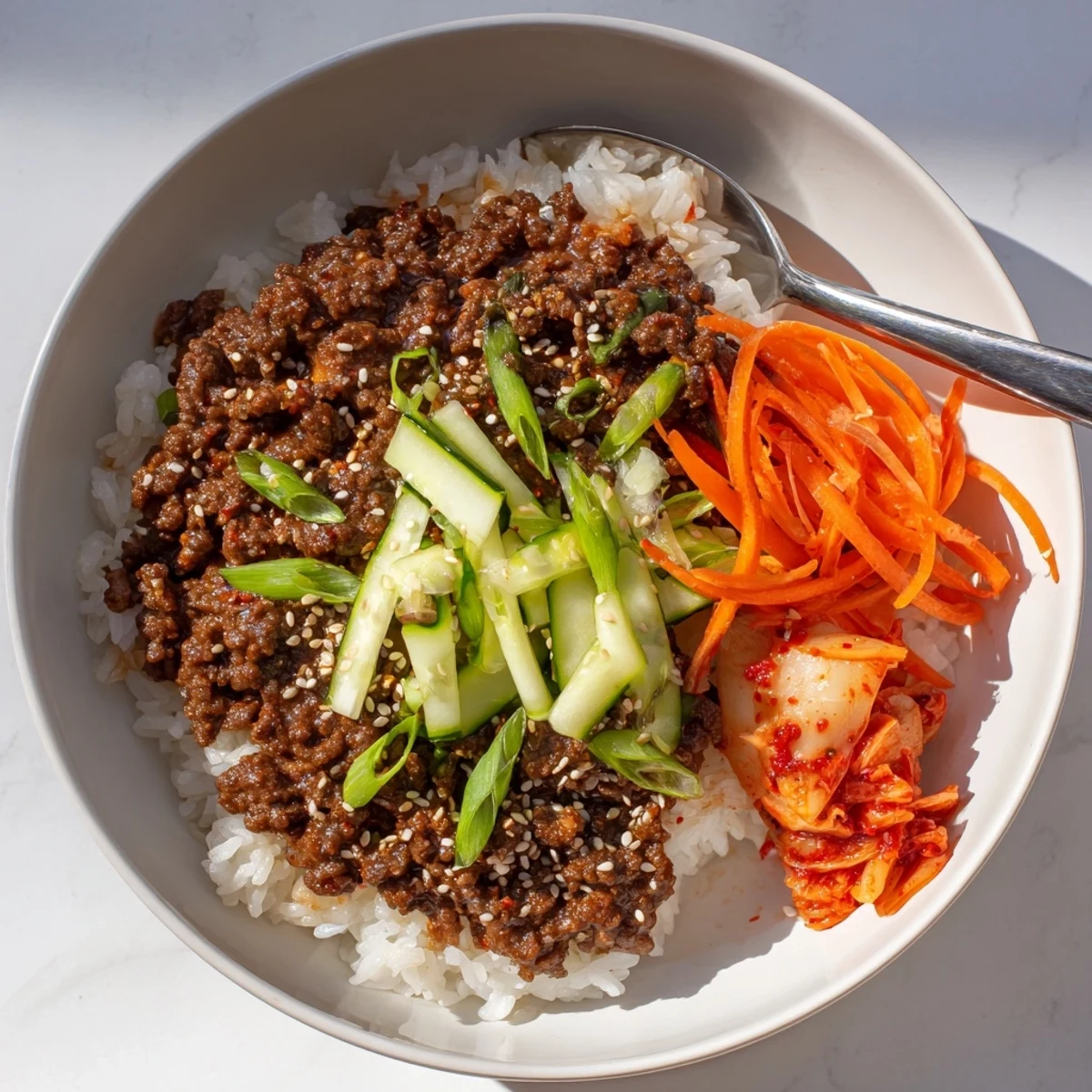
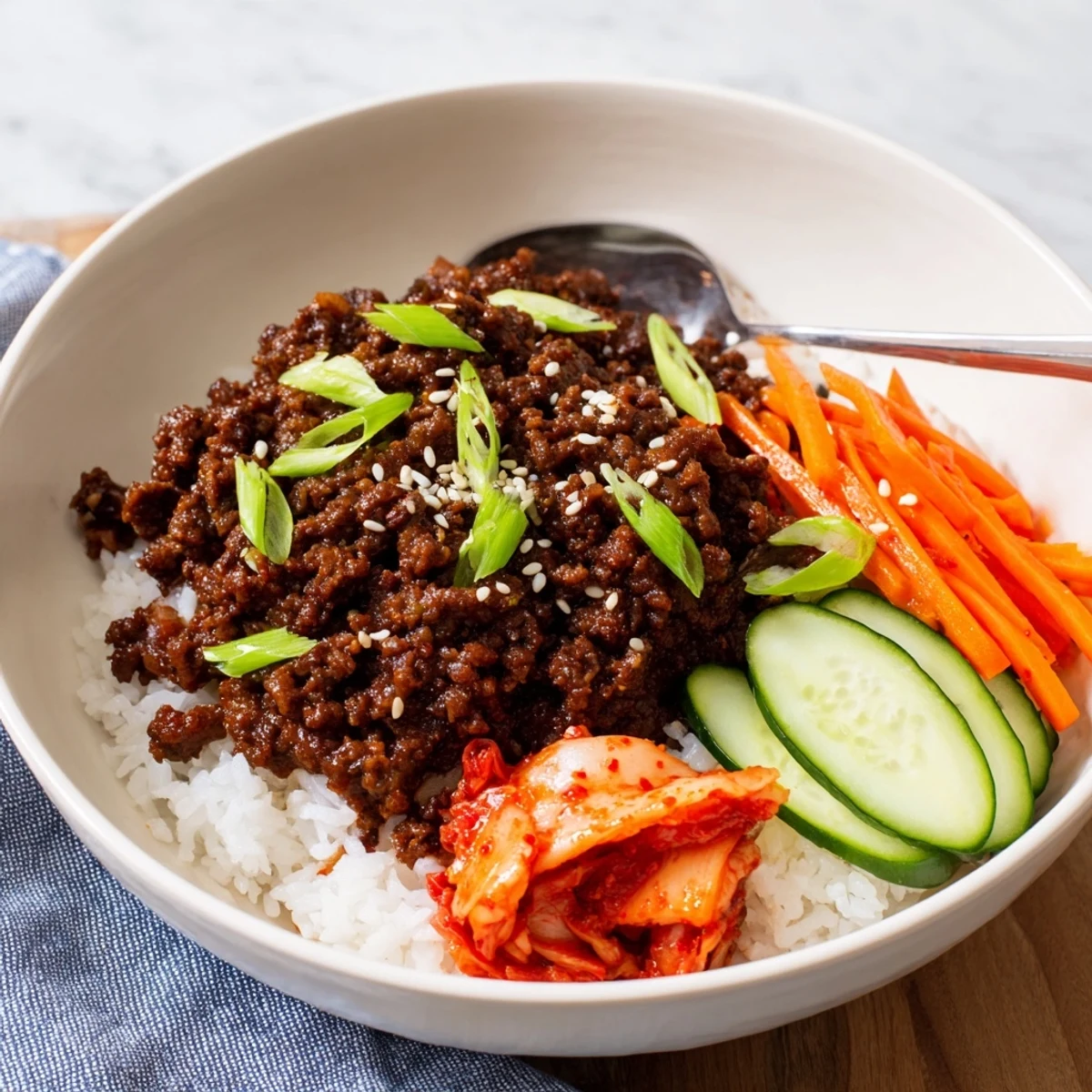
 This Korean ground beef bowl brings together savory browned beef coated in a rich soy-ginger-garlic sauce with a hint of sweetness and customizable heat from gochujang and red pepper flakes.
Served over fluffy jasmine or short-grain rice and finished with crisp julienned carrot, cucumber, sliced green onions, and nutty sesame seeds, it's a complete meal that comes together in under 30 minutes.
Perfect for busy weeknights, this dish is easily adaptable with ground chicken or turkey and can be made gluten-free by swapping soy sauce for tamari.
The sizzle of ground beef hitting a screaming hot pan on a Tuesday evening is one of those sounds that instantly signals dinner is happening, no fuss, no stress. I threw this Korean ground beef bowl together on a night when the fridge was nearly bare and the takeout apps felt overwhelming, and it turned into one of those meals I now crave weekly. The sauce caramelizes into something sticky and irresistible, and the fresh toppings make every bite feel vibrant.
My roommate walked in while I was browning the beef, leaned against the kitchen door frame, and said it smelled like a restaurant in there. We ended up standing around the counter eating straight from the skillet with spoons before I even bothered assembling proper bowls.
Ingredients
- Lean ground beef (1 lb): Use lean so you get good browning without too much grease to drain off.
- Jasmine or short grain rice (2 cups cooked): Short grain gives that slightly sticky texture that grabs onto the sauce beautifully.
- Low sodium soy sauce (1/4 cup): Low sodium lets you control the salt level while still getting deep umami.
- Brown sugar (2 tbsp): This is what creates that glossy, caramel like coating on the beef.
- Sesame oil (1 tbsp): A little goes a long way and adds a toasty nutty backbone to the sauce.
- Garlic, minced (3 cloves): Fresh is non negotiable here, the jarred stuff loses too much punch.
- Fresh ginger, grated (1 tbsp): Freeze your ginger and grate it straight from frozen for the finest texture.
- Crushed red pepper flakes (1/2 to 1 tsp): Start at half a teaspoon and taste before adding more.
- Rice vinegar (2 tsp): Just a splash to brighten everything and cut through the richness.
- Gochujang (1 tbsp, optional): This Korean chili paste adds depth and a fermented warmth that takes it to another level.
- Green onions, sliced (2): Slice them thin on a steep diagonal so they look as good as they taste.
- Toasted sesame seeds (1 tbsp): Toast them yourself in a dry pan for thirty seconds and you will never go back to untoasted.
- Carrot, julienned (1): Adds crunch and a pop of orange that makes the bowl look stunning.
- Cucumber, thinly sliced (1 small): Cool and crisp against the hot savory beef.
- Kimchi (optional, for serving): If you have it, add it, the funky tang is a perfect foil.
Instructions
- Whisk the sauce together:
- In a small bowl, combine the soy sauce, brown sugar, sesame oil, garlic, ginger, red pepper flakes, rice vinegar, and gochujang if you are using it. Whisk until the sugar dissolves and everything looks unified, then set it aside where you can grab it fast.
- Brown the beef:
- Heat a large skillet over medium high heat and add the ground beef, breaking it apart with a spatula or wooden spoon as it cooks. Let it sit undisturbed for a minute here and there so real browning happens, which takes about five to seven minutes total. Drain any excess fat if the beef rendered more than you expected.
- Coat with sauce:
- Pour the sauce over the browned beef and stir well so every crumb gets covered. Let it simmer for two to three minutes until the sauce thickens slightly and turns glossy, clinging to the meat rather than pooling at the bottom.
- Build the bowls:
- Divide the cooked rice among four bowls, then spoon the saucy beef over each portion generously. The heat from the beef will warm the rice and release an amazing aroma.
- Top and serve:
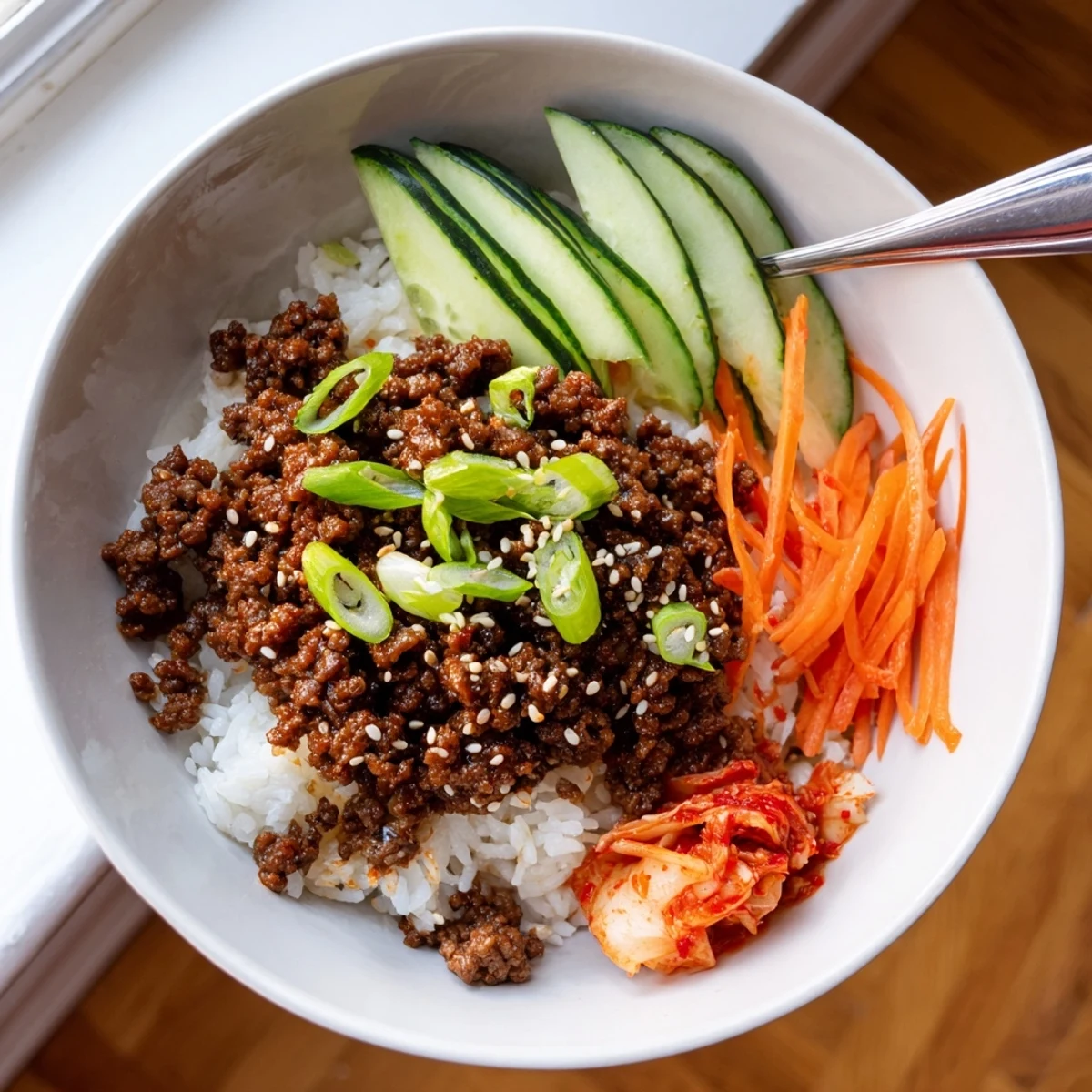
- Scatter green onions, sesame seeds, julienned carrot, cucumber slices, and kimchi over the bowls. Serve immediately while everything is hot and the vegetables still have their crunch.
 Pin It
 I once made a double batch of this for a potluck and watched three people ask for the recipe before they even finished their first bite. It has a way of turning a random weeknight into something that feels a little special without any extra effort.
Swaps and Tweaks
Ground chicken or turkey works beautifully if you want something lighter, though you may want to add a splash more sesame oil since leaner meats produce less fat. For a gluten free version, tamari substitutes seamlessly for soy sauce with barely any detectable difference in flavor. A fried egg on top turns this into a proper meal that feels indulgent and satisfying.
Getting the Spice Right
The beauty of this recipe is how adjustable the heat is. Half a teaspoon of red pepper flakes gives a gentle warmth, while a full teaspoon with gochujang will make your lips tingle in the best way. I learned the hard way that tasting the sauce before adding it to the beef saves you from discovering it is too hot only after everything is mixed together.
Tools and Timing
All you really need is a large skillet, a small bowl for the sauce, a spatula, and a knife and cutting board for the toppings. The whole thing moves so quickly that having everything prepped and within arm reach before you turn on the stove makes the process feel effortless.
- Prep all toppings before you start cooking because the beef finishes faster than you expect.
- Get your rice going first so it is ready and waiting when the beef is done.
- Leftovers reheat beautifully the next day for lunch, maybe even better than fresh.
 Pin It
 This is the kind of recipe that earns a permanent spot in your rotation because it asks almost nothing of you and gives back so much. Make it once and you will probably find yourself doubling the sauce next time.
Recipe Questions & Answers
- → Can I use a different type of meat instead of ground beef?
-
Yes, ground chicken or turkey work well as leaner alternatives. You can also use ground pork for a richer flavor. Keep the cooking time similar, ensuring the meat is fully browned and cooked through before adding the sauce.
- → How spicy is this Korean ground beef bowl?
-
The heat level is fully adjustable. The red pepper flakes and gochujang are optional, so you can start with less and taste as you go. For a mild version, skip the gochujang entirely and use just a pinch of pepper flakes.
- → What type of rice works best for this bowl?
-
Short-grain white rice or jasmine rice are ideal because they have a slightly sticky texture that pairs well with the saucy beef. Brown rice or quinoa can also be used for a healthier twist, though the texture will differ.
- → Can I meal prep this dish ahead of time?
-
Absolutely. The Korean ground beef can be cooked and stored in an airtight container in the refrigerator for up to 4 days. Store the rice separately and keep fresh toppings in their own containers. Reheat the beef and rice, then add the cold toppings just before serving.
- → Is there a substitute for gochujang if I don't have it?
-
If you don't have gochujang, you can use a mix of sriracha and a touch of miso paste for similar depth. Alternatively, a combination of chili garlic sauce and a small amount of sugar can approximate the sweet-spicy-umami profile of gochujang.