
 Pin It
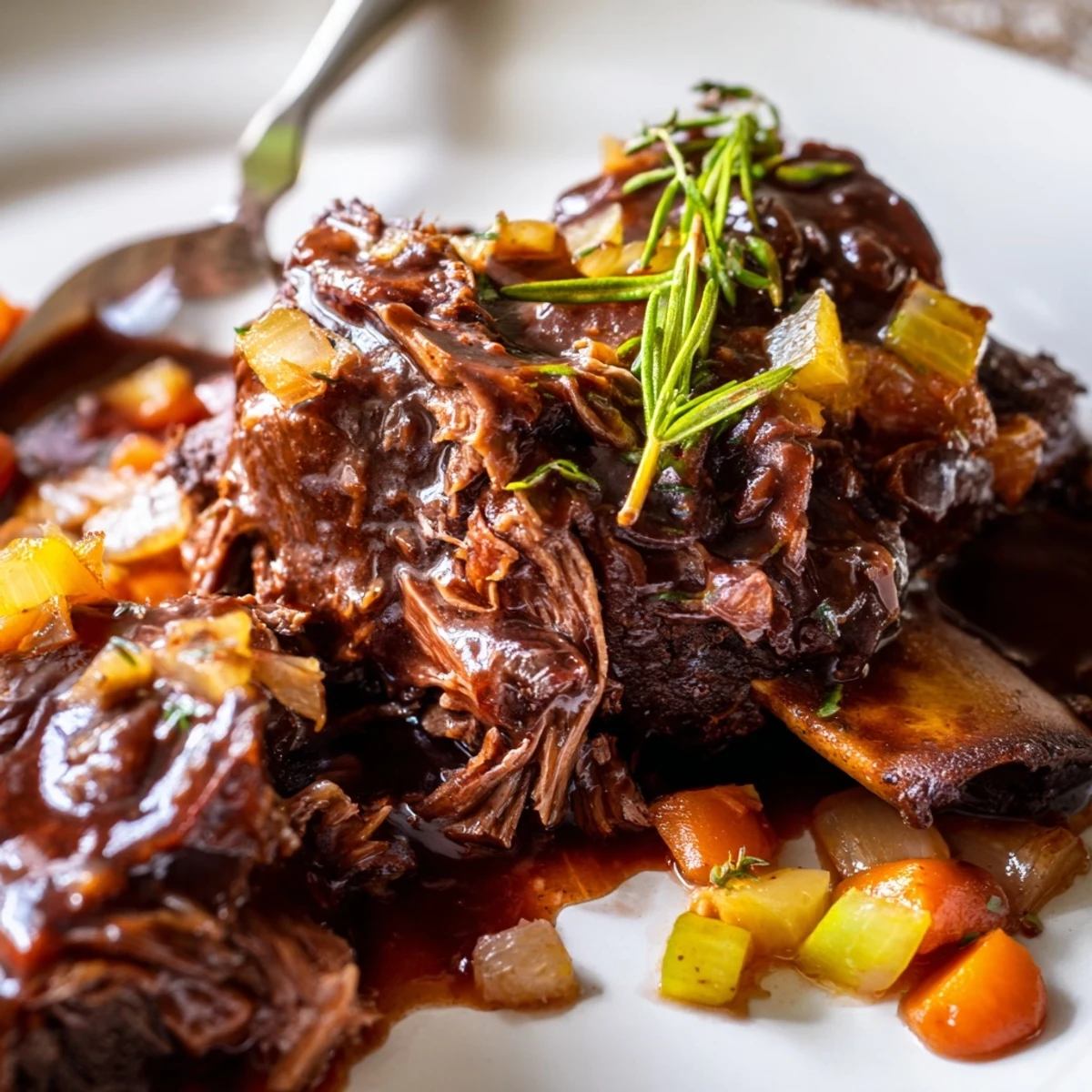
 Tender oven-braised beef short ribs are the ultimate comfort food, cooked low and slow in a rich sauce of red wine, beef broth, and aromatic vegetables until the meat literally falls off the bone.
The process starts with a hard sear to build a caramelized crust, followed by a long, gentle braise at 325°F for nearly three hours. Carrots, celery, onion, and garlic create a flavorful mirepoix base, while fresh rosemary, thyme, and bay leaves add fragrant depth.
Serve these succulent ribs over creamy mashed potatoes, soft polenta, or with crusty bread to soak up every drop of the luscious, reduced braising liquid.
The kitchen smelled like a Sunday I never wanted to end. Rain was tapping against the window, and I had a Dutch oven, a bottle of red wine I was willing to sacrifice, and four pounds of bone in short ribs that promised something extraordinary. Two hours later, the house was unrecognizable, thick with the kind of aroma that makes neighbors knock. That braise turned a gray afternoon into the best meal of the season.
I made these for my brother the night he got promoted, and he stopped mid sentence when he took his first bite. We sat at the table for two hours after that, tearing bread and dragging it through the sauce, not saying much worth repeating but meaning all of it.
Ingredients
- Beef short ribs (4 lbs, bone in): Bone in is non negotiable here because the marrow melts into the braising liquid and creates a sauce you simply cannot fake.
- Carrots (2 medium, diced): They add natural sweetness that balances the deep, savory intensity of the wine and beef.
- Celery (2 stalks, diced): A quiet backbone of flavor that you barely notice until you leave it out and wonder what went wrong.
- Yellow onion (1 large, diced): Dice it small so it melts into the braise rather than floating around in chunks.
- Garlic (4 cloves, minced): Fresh only, and add it after the vegetables have softened so it never turns bitter.
- Dry red wine (1 cup): Use something you would actually drink, because whatever the wine tastes like, your sauce will taste like.
- Beef broth (2 cups, gluten free if needed): This is the backbone of your braising liquid, so reach for a quality brand with real depth.
- Tomato paste (1 tbsp): A small amount that adds umami richness and helps the sauce cling to every bite of meat.
- Fresh rosemary (2 sprigs): Woody and pine scented, it perfumes the braise without overpowering it.
- Fresh thyme (3 sprigs): Thyme and beef are old friends, and you taste why in every spoonful of this sauce.
- Bay leaves (2): Toss them in whole and fish them out before serving, they do quiet background work that matters.
- Salt and black pepper: Season the ribs generously before searing, and adjust the sauce at the very end.
- Olive oil (2 tbsp): Just enough to get a hard sear on the ribs and build your first layer of flavor.
Instructions
- Preheat and prepare:
- Set your oven to 325°F (160°C) and pat the short ribs completely dry with paper towels because moisture is the enemy of a good sear. Season every surface generously with salt and pepper, then let them sit while your pot heats up.
- Sear the ribs:
- Heat olive oil in a large Dutch oven over medium high heat until it shimmers, then add the ribs in batches without crowding. Let them develop a deep brown crust on all sides, roughly 2 to 3 minutes per side, then transfer to a plate and watch the fond build on the bottom of your pot.
- Build the vegetable base:
- Toss the diced carrots, celery, and onion into the same pot with all those gorgeous browned bits, stirring until everything softens and picks up color, about 5 minutes. Stir in the garlic and tomato paste for one more minute until fragrant.
- Deglaze with wine:
- Pour in the red wine and use a wooden spoon to scrape up every last bit of fond from the bottom of the pot because that is concentrated flavor. Let it come to a boil and reduce by roughly half, which should take about 5 minutes.
- Braise low and slow:
- Nestle the seared ribs back into the pot, pour in the beef broth, and tuck in the rosemary, thyme, and bay leaves so the liquid comes most of the way up the meat. Bring it to a gentle simmer on the stovetop, cover with a tight lid, and slide it into the oven for 2.5 to 3 hours until the meat yields to a fork like butter.
- Finish the sauce:
- Remove the ribs and vegetables carefully with tongs, then skim the surface fat from the braising liquid. Discard the herb stems and bay leaves, taste the sauce, and adjust with salt and pepper before spooning it generously over the ribs.
 Pin It
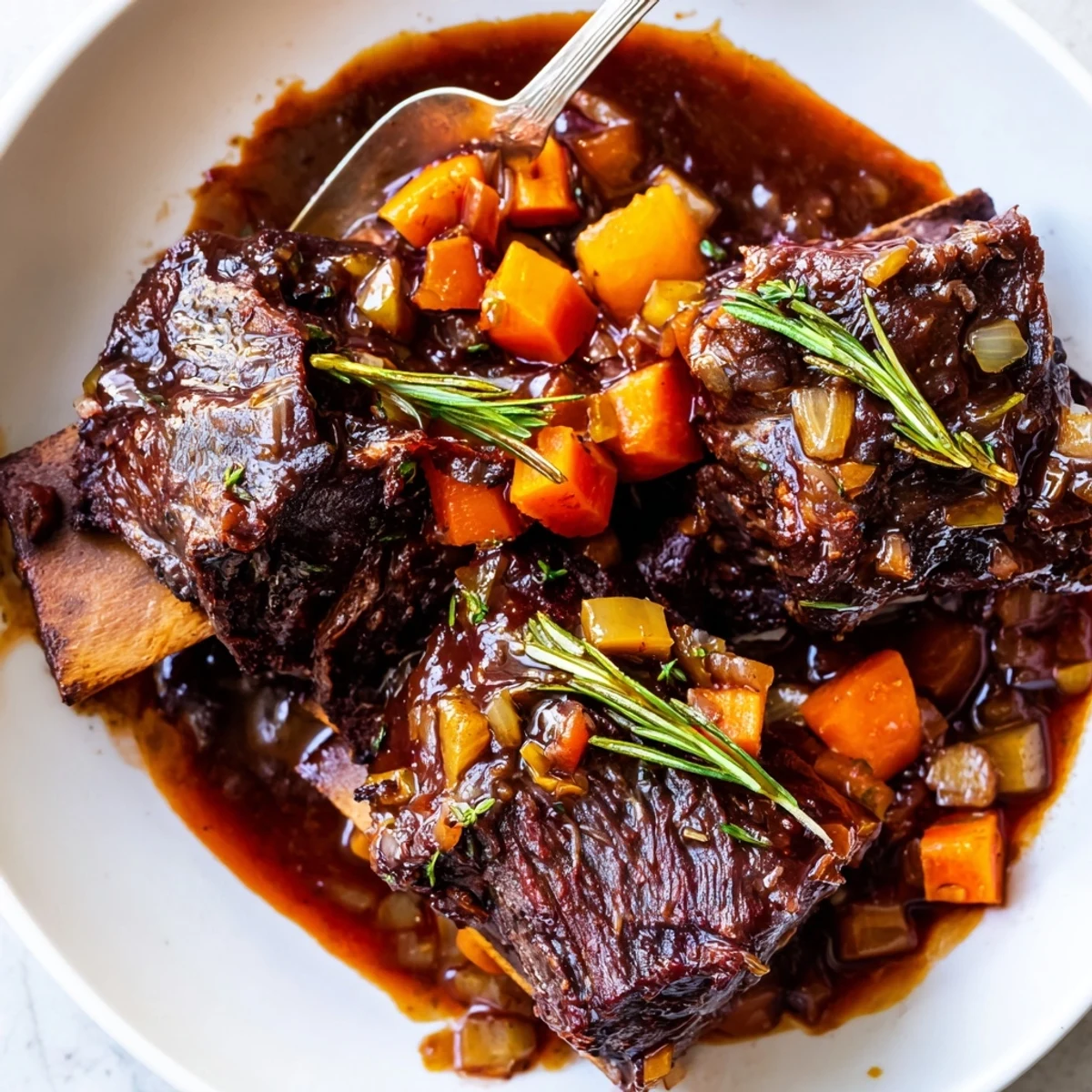
 The moment I lifted the lid and saw those ribs literally collapsing under their own weight, I understood why people braise on cold evenings. It is not just about the food, it is about the transformation that happens when you give something tough and unyielding enough time to become tender.
What to Serve Alongside
Mashed potatoes are the obvious choice because they give the sauce something soft and absorbent to land on, and that combination has never once failed me. Polenta works beautifully too, especially if you finish it with a little butter and parmesan. A crusty loaf of bread on the table is mandatory in my house, because someone always wants to mop the plate clean.
Overnight Marinade Option
If you have the foresight to plan a day ahead, tuck the raw ribs into a large bag or dish with the red wine, garlic, thyme, and rosemary, then let them marinate overnight in the fridge. The next day, pat them dry, sear them, and proceed as written, and you will notice a deeper, more complex flavor running through every bite. It is an optional step, but one I started taking after making this recipe a dozen times and wanting just a little more.
A Few Final Thoughts
This is the kind of recipe that teaches you to trust the process, because halfway through the braise the liquid will look unimpressive and you will doubt everything. Then you lift the lid at hour three and the world makes sense again.
- Leftovers reheat beautifully the next day and the sauce actually tastes better after a night in the fridge.
- If you prefer not to cook with wine, replace it with an equal amount of extra beef broth and a splash of balsamic vinegar.
- Always check your broth and wine labels if cooking for someone who is gluten sensitive.
 Pin It
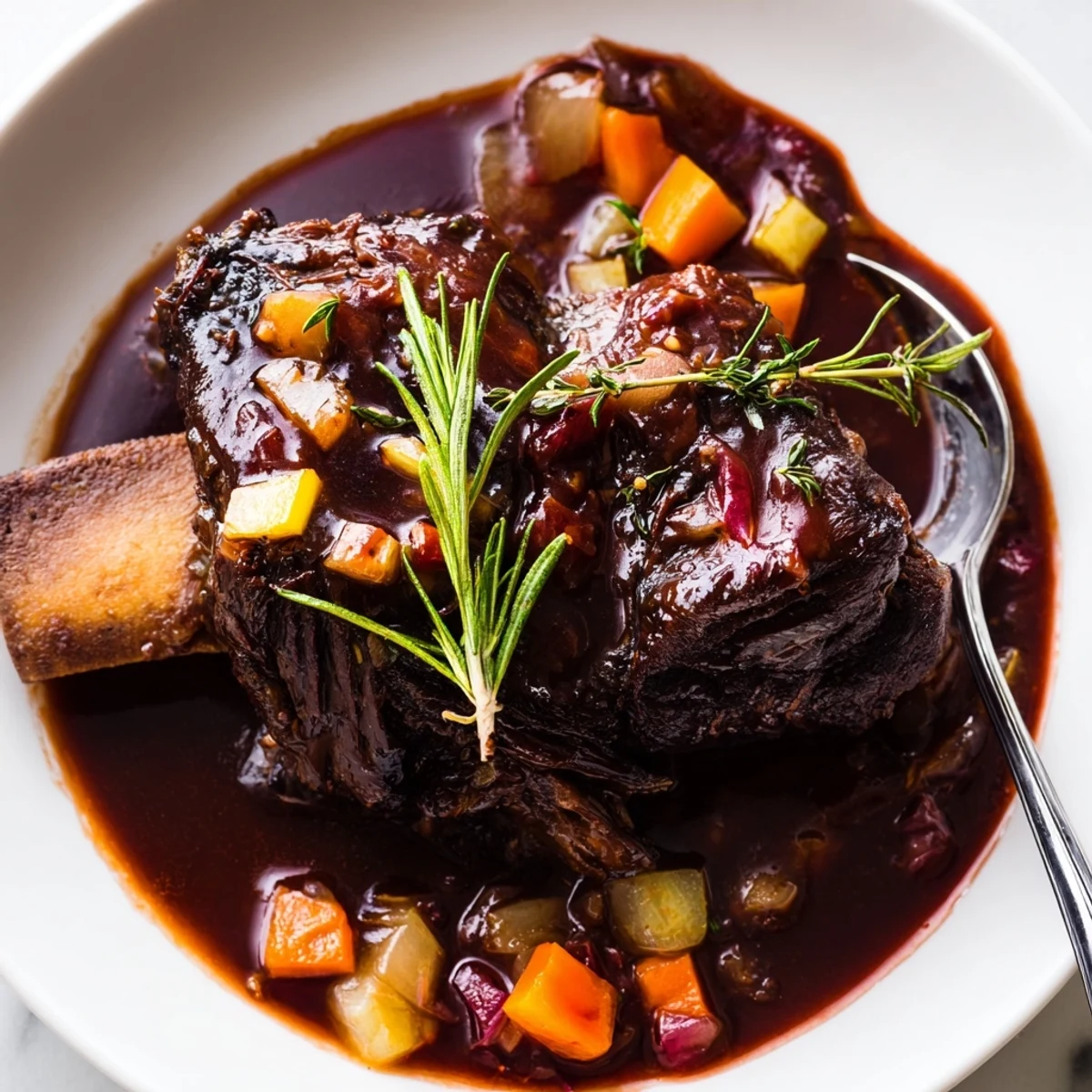
 Some meals feed the body, but these short ribs feed the room, the conversation, and the quiet gratitude of everyone lucky enough to sit at your table. Make them once, and they will become part of your story too.
Recipe Questions & Answers
- → What cut of beef short ribs works best for braising?
-
Bone-in English-style short ribs are ideal for braising. The bones add rich flavor and collagen to the braising liquid, while the connective tissue breaks down during the long cook to create melt-in-your-mouth tenderness. Avoid boneless ribs if you want the deepest flavor.
- → Can I prepare braised short ribs ahead of time?
-
Absolutely — braised short ribs actually taste better the next day. Cook them fully, then refrigerate overnight. The fat solidifies on top for easy removal, and the flavors deepen significantly. Gently reheat in the oven at 300°F covered for about 30 minutes until warmed through.
- → What is the best red wine for braising beef short ribs?
-
Dry, full-bodied red wines like Cabernet Sauvignon, Merlot, or Syrah work beautifully. Avoid sweet wines or cooking wines. Use a wine you would enjoy drinking — the flavor concentrates as it reduces. If avoiding alcohol, substitute with additional beef broth plus a splash of balsamic vinegar.
- → Why do my short ribs come out tough instead of tender?
-
Tough short ribs usually mean they need more cooking time. The collagen in short ribs doesn't break down until after about 2.5 hours of gentle braising. Make sure the liquid is at a bare simmer, not boiling, and keep the pot covered. Patience is key — cook until a fork slides in without resistance.
- → What should I serve with braised beef short ribs?
-
Creamy mashed potatoes are the classic pairing — they soak up the rich braising sauce perfectly. Other excellent options include buttery polenta, egg noodles, roasted root vegetables, or a simple crusty baguette. A bright green vegetable like roasted broccolini or sautéed green beans balances the richness.
- → Do I really need to sear the short ribs before braising?
-
Yes, searing is a crucial step. The high-heat browning triggers the Maillard reaction, creating hundreds of complex flavor compounds that infuse the entire dish during braising. Skip this step and you will lose significant depth of flavor. Take the time to sear in batches without overcrowding the pot.